The Art of the Initial: Reviving Medieval Typography with Antoine Drop Caps
In an era dominated by sans-serif minimalism and screen-optimized readability, the visual language of historical manuscripts offers a profound counterpoint. There is a specific gravity to text that begins not merely with a letter, but with an image. The practice of illuminating the first letter of a paragraph or chapter—known as a drop cap—dates back to the earliest days of codex production. Today, digital designers and typographers are rediscovering this aesthetic through specialized font families like Antoine Drop Caps. This collection allows modern creators to precisely imitate medieval-style text, bridging the gap between the scribe’s quill and the designer’s cursor.
The allure of these fonts lies in their authenticity. Sourced from “Tristan of the Round Table,” a romance published approximately in 1513 by the Parisian printer Antoine Verard, these initials capture the distinct stylistic nuances of early French incunabula. Unlike generic decorative fonts that mimic the *idea* of history, Antoine Drop Caps provides the actual forms used by printers who were transitioning from manuscript traditions to movable type. Understanding how to utilize these characters effectively requires more than just selecting a glyph; it demands an appreciation for context, hierarchy, and the tactile nature of printed word.
Historical Context: The Legacy of Antoine Verard
To understand the value of this font family, one must look at the source material. Antoine Verard was a prominent figure in the late 15th and early 1600s Parisian book trade. His publication of “Tristan of the Round Table” represents a pivotal moment in printing history. While the body text was set in movable type, the initial letters were often left blank in the matrix and filled in by hand with ink or gold leaf. Alternatively, woodblock prints containing elaborate initials were pasted into the page before printing began.
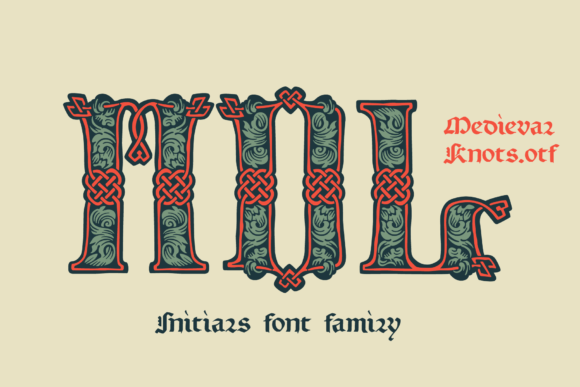
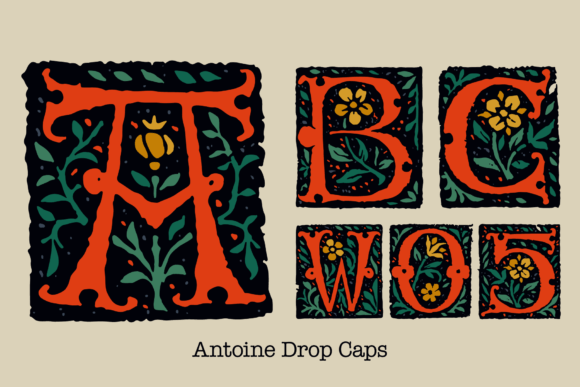
The Antoine Drop Caps font family captures these specific designs. It preserves the intricate line work, the interlacing patterns, and the organic irregularities that distinguish hand-crafted elements from rigid mechanical type. For historians, archivists, and educators, these glyphs serve as more than decoration; they are artifacts of cultural transmission. When a user selects the Regular, Light, or Colored styles within this family, they are not just choosing a weight or color; they are invoking a specific moment in the evolution of Western literacy.
Designing with Authenticity: The Three Styles
The versatility of the Antoine Drop Caps font family stems from its three distinct variations: Regular, Light, and Colored. Each style serves a different functional purpose in modern layout design, allowing for nuanced application depending on the medium and the intended audience.
The Regular Style
The Regular style is the most robust option, designed to anchor a page with substantial visual weight. These initials feature dense line work and complex internal details that hold up well against standard serif body text. In long-form articles, blogs, or digital publications, the Regular style is ideal for marking the beginning of major sections. Its high contrast ensures that the eye is drawn to the start of the paragraph without overwhelming the reader. When paired with a clean, black letter font for the remainder of the text, the Regular drop cap creates a striking focal point that guides the reader through the content structure.
The Light Style
For contexts where subtlety is preferred, the Light style offers a refined alternative. With thinner strokes and less internal density, these initials feel more delicate and airy. This variation is particularly effective in contemporary editorial design, where the goal is to evoke a sense of history without imposing a heavy, archaic aesthetic. The Light style works beautifully in margins or as smaller markers within sidebars. It maintains the medieval character while integrating seamlessly with modern minimalist layouts. Educators might use this style in digital textbooks to add a touch of elegance without distracting students from the core material.
The Colored Style
The Colored style breaks away from the monochrome tradition of early printing, offering vibrant options that reflect the illuminated manuscripts of the later Middle Ages. These glyphs are pre-filled with hues that suggest gold leaf, lapis lazuli, or vermilion. While historically accurate for certain types of luxury books, in a digital context, the Colored style must be used judiciously. Overuse can lead to visual clutter. However, when applied sparingly—for instance, to highlight a key quote or a section header in a creative portfolio—it adds a layer of richness and depth that monochrome cannot achieve. It signals to the reader that the following content is of special importance.
Practical Applications in Modern Design
The integration of Antoine Drop Caps extends beyond mere nostalgia. There are several practical scenarios where these fonts enhance communication and engagement.
- Digital Storytelling: For writers publishing serialized fiction, fantasy, or historical dramas, drop caps provide an immersive experience. They signal to the reader that they are entering a narrative world. A writer using a platform like Substack or Medium can insert these initials at the start of each chapter to maintain continuity and atmosphere.
- Educational Materials: Teachers and curriculum developers can use these fonts to make learning materials more engaging. In history classes discussing the Renaissance or the Age of Exploration, displaying primary source excerpts with authentic drop caps helps students visualize the historical context. It transforms abstract text into a tangible object of study.
- Branding and Identity: Brands that wish to convey heritage, craftsmanship, or authority often turn to serif typography and historical motifs. A law firm, a boutique hotel, or a specialty food producer might use a Light or Colored drop cap in their logo or marketing collateral to suggest timelessness and quality.
- Event Invitations and Certificates: Formal documents benefit greatly from the gravitas of a drop cap. Wedding invitations, academic certificates, and awards can be elevated by starting the main text with an intricate initial. This small detail communicates care and attention to precision.
Implementation Considerations
While the aesthetic benefits are clear, implementing Antoine Drop Caps requires technical and design awareness. The primary challenge lies in spacing and alignment. Medieval initials were designed to interact with the surrounding text in ways that modern automatic justification does not always replicate.
Indentation and Space: Traditional drop caps often hang into the margin or indent deeply into the text block. In web design, this can be achieved using CSS properties like float, shape-outside, or grid layouts. Designers must ensure that the text wraps around the initial gracefully, avoiding awkward gaps or overlaps. The width of the drop cap should be proportional to the height of the surrounding lines of text.
Font Pairing: The success of a drop cap depends heavily on the body font chosen. Since Antoine Drop Caps is highly ornate, the accompanying text should be simple and legible. Serif fonts with moderate contrast, such as Garamond, Caslon, or Baskerville, are natural partners. They share the same historical lineage and visual rhythm. Avoid pairing them with geometric sans-serifs, which can create a jarring dissonance unless intentional irony is the goal.
Accessibility: From an accessibility standpoint, large decorative initials can sometimes pose challenges for screen readers if not coded correctly. It is essential to mark the drop cap appropriately in HTML so that it is announced as part of the sentence structure, rather than as a separate image or ignored element. Using semantic tags like with appropriate aria-labels ensures that visually impaired users receive the full textual content.
The Future of Historical Typography
As digital tools become more sophisticated, the boundary between historical reproduction and modern design continues to blur. The availability of high-quality font families like Antoine Drop Caps empowers a broader range of creators to experiment with historical aesthetics. We are seeing a resurgence of interest in "neo-medieval" design, where ancient forms are reinterpreted for contemporary needs.
This trend is not about rejecting modernity but about enriching it. By incorporating elements like drop caps, designers acknowledge the deep roots of written communication. They remind us that text is not just data; it is art. Whether used in a scholarly journal, a children’s book, or a corporate brochure, the Antoine Drop Caps font family offers a unique opportunity to connect with the past. It invites the reader to slow down, to appreciate the form of the letter, and to engage with the content on a deeper level.
In conclusion, the revival of medieval-style typography is more than a stylistic choice; it is a statement about the value of craftsmanship. By utilizing the Regular, Light, and Colored styles of Antoine Drop Caps, designers can create documents that are not only informative but also visually compelling. As we move forward in the digital age, preserving and adapting these historical forms ensures that the beauty of the written word remains alive and relevant. The next time you begin a new project, consider letting your text start with a flourish. Let the initial speak, and let the story unfold from there.