Romanji Font Review: A Bold, Modern Display Type for High-Impact Design
In the landscape of digital and print design, typography serves as the primary vehicle for visual communication. While body text prioritizes readability and neutrality, display fonts carry the weight of brand identity, emotional resonance, and immediate visual impact. Among the growing library of modern typefaces, Romanji has emerged as a distinct option for designers seeking an elegant yet assertive aesthetic. This article provides a practical evaluation of Romanji, examining its stylistic characteristics, technical implementation, and suitability for various professional applications.
Understanding the Romanji Typeface
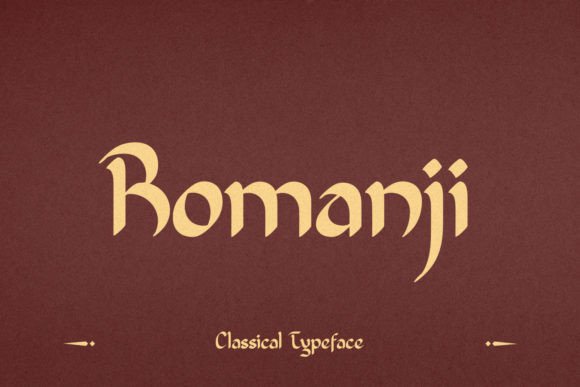
Romanji is classified as a display font, a category reserved for typefaces designed to be used at large sizes where legibility is less constrained than in body copy. Its style is described as elegant and modern, striking a balance between traditional sophistication and contemporary boldness. The font adds a "bold touch" to projects, suggesting that it possesses significant visual weight and presence without resorting to heavy-handed or aggressive styling.
The name itself hints at a fusion of influences, potentially drawing inspiration from Japanese typographic sensibilities while maintaining a Western structural integrity. This hybrid appeal makes it particularly versatile for brands aiming to communicate precision, creativity, and global awareness. For professionals such as graphic designers, art directors, and creative freelancers, understanding the nuanced character of a font like Romanji is essential before integrating it into a broader design system.
Key Characteristics and Design Strengths
What distinguishes Romanji from other modern sans-serif or serif display fonts is its specific attention to detail and versatility across different media. Below are the core attributes that define its utility:
- Elegant Modern Style: The letterforms are crafted with clean lines and refined proportions. This elegance allows the font to work well in high-end contexts, such as luxury branding or editorial layouts, where subtlety and quality are paramount.
- Bold Visual Presence: Despite its elegance, Romanji does not lack strength. Its bold variants provide the necessary contrast to grab attention, making it effective for headlines that need to stand out against complex backgrounds or busy imagery.
- Versatility Across Media: The font’s design philosophy supports a wide range of use cases. Whether applied to digital screens or physical prints, Romanji maintains its integrity, ensuring consistency in brand presentation.
- Inspirational Quality: From a user experience perspective, the font is designed to inspire creativity. Its unique character can serve as a starting point for conceptual development, encouraging designers to explore more dynamic compositions.
Technical Features: PUA Encoding and Glyph Access
One of the most significant technical advantages of Romanji is its encoding method. The font is PUA encoded, which stands for Private Use Area encoding. In standard Unicode, certain special characters, ligatures, swashes, and alternate glyphs may not have dedicated code points. PUA encoding allows font creators to assign these additional elements to unused slots in the Unicode block.
For the end-user, this means that all available glyphs, including decorative swashes and alternative character forms, are accessible directly within the font file. This ease of access is crucial for professional workflows where efficiency matters. Designers do not need to rely on third-party plugins or complex OpenType feature toggles if they are working in software that fully supports PUA fonts. Instead, they can insert these specialized characters with standard keyboard shortcuts or character maps, streamlining the design process.
This technical robustness ensures that the font remains reliable across different operating systems and design applications, reducing the risk of missing glyphs or broken layouts during the handoff to developers or printers.
Practical Applications and Use Cases
Given its dual nature of elegance and boldness, Romanji is suited for a variety of high-visibility applications. It is not intended for long-form body text but excels in contexts where the text itself is a primary visual element.
Branding and Logotypes
For entrepreneurs and small business owners, establishing a memorable brand identity is critical. Romanji’s distinctive style makes it an excellent candidate for logotypes and wordmarks. The font’s modern feel helps brands appear current and forward-thinking, while its elegance conveys trust and professionalism. It is particularly effective for businesses in the creative industries, fashion, lifestyle, and technology sectors.
Printed Materials and Packaging
In the realm of physical marketing materials, Romanji shines. Its bold touch ensures that headlines on flyers, posters, and product packaging are readable from a distance. For greeting cards and printed quotes, the font’s elegant curves add a personal and sophisticated touch that resonates with recipients. Product packaging benefits from the font’s ability to convey quality and attention to detail, which can influence consumer perception of the product inside.
Digital and Editorial Design
Bloggers, publishers, and educators can utilize Romanji for featured headings, pull quotes, and section dividers. On digital platforms, where screen real estate is competitive, a strong display font helps break up content and guide the reader’s eye. Album covers and apparel designs also benefit from Romanji’s artistic flair, allowing designers to create visually striking graphics that stand out in crowded marketplaces.
Evaluating Usability and Workflow Integration
When considering whether to adopt Romanji for a project, several practical factors come into play:
- Consistency: The font family likely offers multiple weights and styles, allowing for hierarchical text structures. This flexibility is essential for creating balanced layouts that guide the viewer through information effectively.
- Reliability: PUA encoding reduces compatibility issues. However, designers should always test the font in the final output environment, especially when sharing files with clients or collaborators who may not have the font installed. Embedding the font in PDFs or using web-font alternatives (if available) is recommended for consistent rendering.
- Long-Term Value: As a modern typeface, Romanji is designed to withstand trends. Its timeless elegance ensures that designs created with it will remain relevant for years, reducing the need for frequent rebranding due to outdated typography.
Potential Limitations and Considerations
No single typeface is a universal solution. Romanji’s strengths in display contexts mean it has limitations in other areas. It is not suitable for dense paragraphs of text, where its bold character might overwhelm the reader. Additionally, because it is PUA encoded, older or less sophisticated design software may struggle to render the full set of glyphs correctly. Users must ensure their tools support PUA fonts to fully leverage the font’s capabilities.
Furthermore, the font’s distinctive style may not align with every brand voice. For companies seeking a minimalist, neutral, or highly utilitarian aesthetic, Romanji might be too expressive. It is best employed when the goal is to make a statement, evoke emotion, or highlight creativity.
Who Should Consider Romanji?
Romanji is ideal for:
- Graphic Designers: Who need a versatile display font for client projects ranging from branding to editorial design.
- Marketers: Looking to create eye-catching campaigns that require both elegance and impact.
- Entrepreneurs: Building a brand identity that communicates modernity and sophistication.
- Creative Hobbyists: Enthusiasts designing custom apparel, album art, or personal projects who value unique typographic elements.
Final Assessment
Romanji represents a thoughtful addition to the modern typographic toolkit. By combining elegant aesthetics with bold presence and robust technical features like PUA encoding, it offers significant value to professionals and hobbyists alike. Its ability to adapt to diverse applications—from digital headings to physical packaging—makes it a flexible asset for any design workflow.
For those seeking a font that inspires creativity while delivering clear, impactful communication, Romanji is a compelling choice. It is worth evaluating in the context of specific project needs, particularly where visual hierarchy and brand personality are key objectives. When used appropriately, Romanji can elevate a design from functional to memorable, proving that typography is not just about reading, but about feeling.