Evaluating Ransack: A Deep Dive into Blackletter Typography for Modern Design
Selecting the right typeface is rarely a simple task. It involves balancing aesthetic appeal with functional readability, brand alignment, and technical constraints. Among the vast array of display fonts available to designers today, Ransack stands out as a distinct and intricate blackletter font. This classification of typeface, rooted in medieval calligraphy, has evolved significantly over centuries, moving from religious manuscripts to modern branding. When evaluating whether Ransack belongs in your design toolkit, it is essential to look beyond its initial visual impact and understand its structural nuances, versatility, and specific use cases.
Ransack is not merely a复古 (retro) style; it is a meticulously crafted digital interpretation of historical letterforms. Its neat craftsmanship and high level of detail make it a powerful asset for projects that require a sense of heritage, authority, or dramatic flair. However, like all serif and decorative fonts, it comes with specific trade-offs regarding legibility and application scope. This analysis aims to provide a practical evaluation of Ransack, helping you determine when it enhances a creation and when another option might serve your needs better.
The Anatomy and Distinctive Features of Ransack
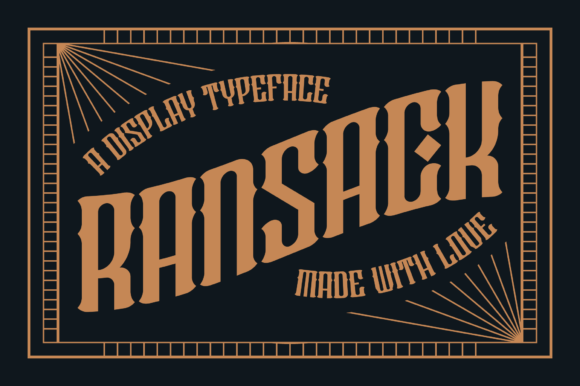
To appreciate Ransack, one must first understand the characteristics that define the blackletter family. Unlike sans-serif fonts, which prioritize clarity and minimalism, or standard serifs, which offer traditional elegance, blackletter fonts are defined by their dense, vertical strokes and sharp angles. Ransack captures this essence while maintaining a level of refinement that prevents it from feeling overly chaotic or difficult to read at larger sizes.
The font’s most notable attribute is its intricate detailing. Each character is constructed with precision, ensuring that the contrast between thick and thin strokes is balanced. This balance is crucial because many blackletter fonts suffer from being too heavy or "muddy" when scaled down. Ransack avoids this pitfall through careful kerning and spacing adjustments, allowing the letters to breathe despite their complex structures. The result is a typeface that feels both historic and contemporary—a quality that makes it particularly appealing for modern brands looking to evoke tradition without appearing outdated.
Furthermore, the neatness of Ransack’s construction ensures consistency across the entire alphabet. In some blackletter designs, irregularities in stroke width or angle can create a disjointed appearance. Ransack maintains a uniform rhythm, which contributes to its professional polish. This attention to detail extends to special characters and punctuation marks, ensuring that the font remains cohesive even in mixed-content layouts. For designers who value precision, this level of craft is a significant advantage.
Comparative Analysis: Ransack vs. Standard Display Options
When comparing Ransack to other display fonts, the primary distinction lies in its cultural and historical connotations. Standard display fonts—such as bold slab serifs or geometric sans-serifs—are often chosen for their neutrality and broad applicability. They communicate modernity, efficiency, and clarity. Ransack, by contrast, communicates something entirely different: gravitas, mystery, and craftsmanship.
- Readability: While standard display fonts are designed for quick scanning, Ransack demands more cognitive effort from the reader. This makes it less suitable for body text but highly effective for headlines where the goal is to arrest attention.
- Versatility: Neutral display fonts can be used in almost any industry, from tech startups to healthcare. Ransack is more niche, fitting best within industries such as brewing, gaming, music, fashion, and publishing.
- Visual Weight: Ransack carries significant visual weight due to its dense ink coverage. This allows it to dominate a layout, whereas lighter display fonts may require additional graphical elements to achieve the same impact.
This comparison highlights that Ransack is not a replacement for standard display fonts but rather a specialized tool. It should be selected when the project requires a specific mood or thematic resonance that neutral fonts cannot provide. For instance, a tech company launching a new app would likely find Ransack inappropriate, whereas a heavy metal band designing an album cover would find it nearly indispensable.
Ideal Use Cases and Application Scenarios
Understanding where Ransack shines requires identifying contexts where its unique aesthetic adds value rather than hindering communication. The font’s strength lies in its ability to set a tone immediately. Below are several scenarios where Ransack proves to be a wonderful asset.
Branding and Logo Design
In logo design, memorability and uniqueness are paramount. Ransack’s intricate details allow for the creation of logos that stand out in crowded markets. Brands in the craft beer industry, for example, frequently use blackletter fonts to signal authenticity and artisanal quality. Similarly, tattoo studios and leather goods manufacturers may choose Ransack to emphasize handcrafted traditions. The font’s ability to convey texture and history helps these brands connect emotionally with their audience.
Editorial and Publication Design
Magazines, newspapers, and books often use distinctive typefaces for section headers, pull quotes, or chapter titles. Ransack can add a layer of sophistication to editorial layouts, particularly in genres such as fantasy literature, historical non-fiction, or true crime. Its dark, gothic undertones align well with suspenseful or dramatic narratives, enhancing the reader’s immersion without overwhelming the main text.
Packaging and Merchandise
Product packaging benefits from strong visual hierarchy, and Ransack excels at creating focal points. On beer bottles, wine labels, or apparel, the font’s bold presence ensures that the brand name is noticed from a distance. Additionally, the detailed nature of the letters creates interesting textures when printed on various materials, such as textured paper or embossed surfaces. This tactile quality further enhances the perceived value of the product.
Troubleshooting and Limitations
Despite its strengths, Ransack is not without limitations. Designers must be aware of these constraints to avoid common pitfalls. The most significant challenge is legibility at small sizes. Due to the complexity of blackletter forms, reducing the font size can cause the letters to blur together, rendering them unreadable. Therefore, Ransack should generally be reserved for large-scale applications, such as posters, banners, and screen headings.
Another consideration is color and background contrast. Because Ransack is visually dense, it performs best against clean, uncluttered backgrounds. Using it on busy patterns or low-contrast colors can obscure its details and reduce impact. Additionally, pairing Ransack with other fonts requires care. Since it is a strong statement typeface, it pairs best with simple, understated sans-serifs or light serifs that do not compete for attention. Avoid pairing it with other decorative or heavy fonts, as this can create visual chaos.
Technical implementation is also a factor. Ensure that the version of Ransack you are using includes a full range of weights and styles if your project requires flexibility. Some blackletter fonts offer limited variations, which can restrict creative options. A comprehensive font library allows for greater experimentation with scale and emphasis.
Decision Framework: Is Ransack Right for Your Project?
Choosing between Ransack and alternative options ultimately depends on the specific goals of your project. Consider the following decision factors:
- Brand Identity: Does your brand value tradition, craftsmanship, or drama? If yes, Ransack is a strong candidate. If your brand emphasizes innovation, simplicity, or accessibility, consider a modern sans-serif instead.
- Context of Use: Will the font be used primarily for headlines or body text? Ransack is ideal for headlines. For extended reading, stick to more readable typefaces.
- Audience Expectations: Who is your target audience? Certain demographics may associate blackletter fonts with negative stereotypes or niche subcultures. Ensure that the font aligns with your audience’s perceptions and expectations.
- Design Constraints: Do you have the space and resolution to showcase the font’s details? If your medium is small or low-resolution, Ransack may not render effectively.
By carefully evaluating these factors, you can make an informed decision that leverages Ransack’s potential while mitigating its risks. Remember that typography is a form of communication, and every choice sends a message. Ransack sends a message of depth, history, and intricacy. When used thoughtfully, it can elevate a design from ordinary to extraordinary.
Final Thoughts on Integration
Incorporating Ransack into your design library offers a versatile tool for adding character and distinction to your work. Its neat craftsmanship and high level of detail ensure that it remains relevant in contemporary design contexts, provided it is applied with intention. Whether you are crafting a brand identity, designing a poster, or editing a publication, Ransack has the potential to enhance any creation. By understanding its strengths, limitations, and ideal use cases, you can integrate this font seamlessly into your workflow, achieving results that are both visually striking and functionally sound.
As you explore alternatives and compare options, keep in mind that no single font is universally superior. The best choice is always the one that best serves the specific needs of your project. Ransack is a compelling option for those seeking to inject a sense of timelessness and intricacy into their designs. With careful selection and thoughtful application, it can become a cornerstone of your typographic repertoire.