Medieval Leaves: Bringing Historical Elegance to Modern Design
There is a specific kind of magic that happens when you look at a page from a 15th-century illuminated manuscript. It isn’t just about the text; it’s about the way light seems to catch the gold leaf, the intricate vines curling around the margins, and those massive, ornate initial letters that demand your attention before you’ve even read the first word. For modern designers, typographers, and creative professionals, capturing that sense of history and grandeur has always been a challenge. You want the weight and authority of blackletter script without spending weeks hand-illuminating every single document. This is where Medieval Leaves steps in as an essential tool in the digital toolkit.
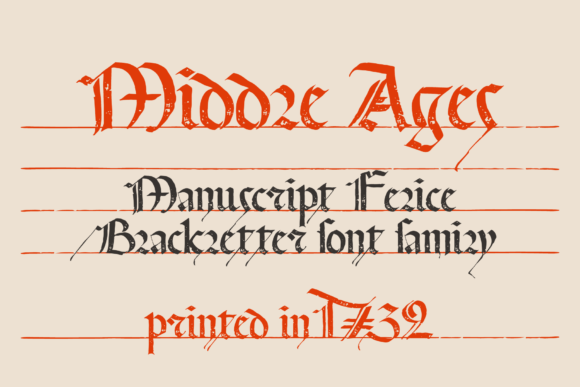
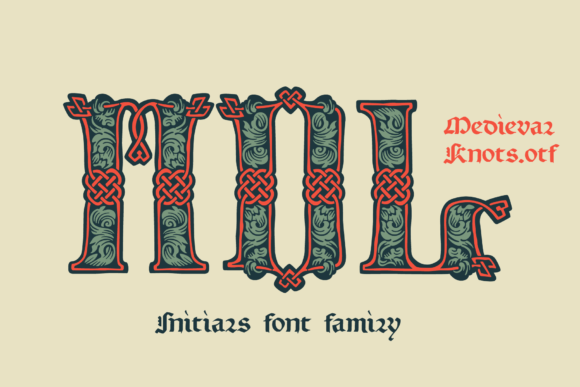
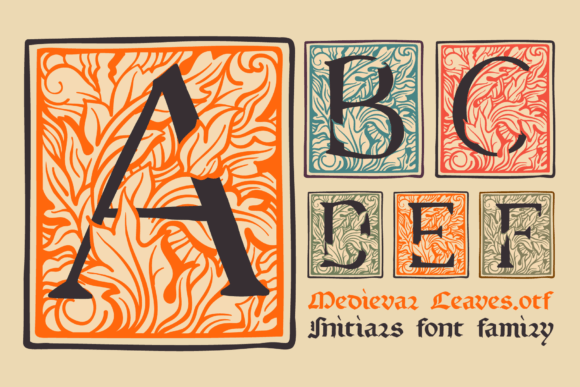
At its core, Medieval Leaves is not merely a font; it is a stylistic bridge between the artisanal past and the efficient present. The typeface was assembled based on a very specific historical artifact: an ancient book featuring a pretty H-letter initial, beautifully engraved with leaves. By studying the structure, flow, and decorative complexity of that original illumination, designers created a colored decorative font that retains the distinct touch of medieval blackletter while offering the versatility needed for contemporary projects. It is designed to be precise, allowing users to imitate medieval-style text with a level of authenticity that standard Gothic fonts often lack.
The Power of the Decorative Initial
One of the most effective ways to use Medieval Leaves is by leveraging its strength as a decorative element at the beginning of a paragraph or section. In traditional manuscripts, the "historiated initial" or simply the decorated capital served as a visual anchor. It told the reader, "Pay attention here; this is important." You can replicate this psychological effect in modern web design, editorial layouts, and print media.
Imagine opening a long-form article on a website dedicated to history, fantasy literature, or even high-end culinary arts. Instead of starting with a plain, bold serif headline, you introduce the section with a large, vibrant Medieval Leaves initial. The letter might be filled with rich colors—deep blues, ruby reds, or emerald greens—and adorned with the characteristic leafy engravings. As soon as the eye hits that initial, the tone is set. It feels curated, expensive, and thoughtful.
However, the key to making this work lies in contrast. If the entire paragraph were rendered in Medieval Leaves, it would be nearly illegible for the average reader. The human brain struggles to process dense blocks of highly decorative text. Therefore, the best practice is to use Medieval Leaves exclusively for that first letter, while keeping the rest of the paragraph in a clean, regular blackletter font or a complementary serif typeface. This creates a rhythm. The eye is caught by the decoration, then flows smoothly into the readable body copy. It mimics the natural reading experience of flipping through a well-preserved codex, where the decoration guides but does not obstruct the narrative.
Applications Across Industries
While the name suggests a niche appeal, the utility of Medieval Leaves extends far beyond just reproducing old books. Let’s look at how different sectors are finding practical value in this aesthetic.
- Publishing and Editorial: Magazines focusing on heritage brands, luxury goods, or academic journals often use Medieval Leaves for pull quotes or chapter headers. It adds a layer of gravitas that sans-serif fonts simply cannot achieve. A recipe book for historical cuisine, for instance, could use these initials to denote each course, instantly transporting the reader back to a banquet hall.
- Gaming and Entertainment: The fantasy genre is saturated with medieval aesthetics, but many designs fall into cliché. Using a font like Medieval Leaves, which is rooted in actual engraving styles rather than generic gothic interpretations, gives game UIs, book covers, and promotional materials a unique, authentic flavor. It signals to the audience that the world-building is detailed and respectful of historical context.
- Event Design and Weddings: There is a growing trend toward "dark academia" and vintage-inspired wedding stationery. Invitations, menus, and place cards benefit immensely from the colored, leafy details of Medieval Leaves. It elevates the paper stock and makes the event feel exclusive and timeless.
- Branding and Logos: For breweries, distilleries, or craft shops that want to evoke tradition and craftsmanship, Medieval Leaves can be used in logo construction. The H-initial story is particularly potent for brands starting with H, but the style works for any word where the first letter needs to carry the visual weight.
Considerations for Implementation
Before you rush to apply Medieval Leaves to your next project, there are practical considerations to keep in mind. Because it is a colored decorative font, it relies heavily on color theory. The original inspiration came from illuminated manuscripts, which used pigments to create depth. When digitizing this, ensure that the colors chosen have sufficient contrast against your background. Dark greens and deep purples can get lost on dark backgrounds, while bright golds might vibrate uncomfortably against white if not handled carefully.
Another consideration is scale. These fonts are designed to be seen. They lose their charm when shrunk down to footnote size. Reserve Medieval Leaves for headlines, drop caps, logos, and significant graphical elements. Do not attempt to use it for navigation bars or small UI buttons. The intricate engravings will turn into mud at small sizes, defeating the purpose of clarity.
Furthermore, think about accessibility. While the visual impact is strong, remember that decorative fonts should never compromise readability for the sake of style. If you are using Medieval Leaves for a heading, ensure the supporting text is highly legible. Screen readers do not care about the visual beauty of an initial, so ensure your HTML structure (using span tags or similar) correctly separates the decorative character from the semantic text content. This ensures that your beautiful design remains inclusive.
Why Choose Medieval Leaves Over Generic Gothic?
You might wonder why one would choose Medieval Leaves over more common blackletter options like Old English or Fraktur. The answer lies in nuance. Standard blackletter fonts are often monochromatic and rigid. They lack the organic, flowing quality of hand-engraved art. Medieval Leaves, being derived from a specific illuminated initial, carries the irregularity and warmth of human craftsmanship. The "leaf" aspect introduces natural forms—vines, stems, and foliage—that soften the harshness of traditional gothic strokes.
This makes it particularly appealing for audiences who want to evoke emotion rather than just information. A legal document might use standard blackletter for formality, but a fantasy novel cover or a boutique hotel menu uses Medieval Leaves to evoke wonder and elegance. It is less about imposing authority and more about inviting the viewer into a story.
In a digital landscape dominated by flat design and minimalism, reintroducing these complex, colorful, and historically rooted elements can be a powerful differentiator. It breaks the monotony of the grid. It reminds us that typography is not just about conveying words; it is about setting a mood. Whether you are designing a wedding invitation, a game interface, or a brand identity, Medieval Leaves offers a direct line to the artistic traditions of the past, packaged in a format that is ready for the screens and presses of today. It is a reminder that sometimes, the most modern solution is to look back at the beauty of the illuminated page.