Blesolen: The Intersection of Blackletter Tradition and Modern Branding
In the ever-evolving landscape of digital and print design, typography serves as the silent ambassador for every brand. It communicates tone, heritage, and personality before a single word is read. Among the myriad of typefaces available to designers today, Blesolen stands out as a distinctive choice that bridges the gap between historical craftsmanship and contemporary aesthetics. This modern script blackletter font has garnered attention not merely for its visual impact, but for its ability to inject character into projects that demand both authority and elegance.
For business owners, creative directors, and independent creators, selecting the right typeface is often a balancing act. You want something that feels established and trustworthy, yet fresh enough to resonate with modern audiences. Blesolen offers a solution to this common dilemma. By combining the bold, structured letterforms of traditional blackletter scripts with fluid, contemporary ligatures, it creates a striking and edgy look. This article explores the nuances of Blesolen, examining its features, ideal use cases, and the practical considerations involved in integrating it into your design workflow.
Understanding the Design Philosophy Behind Blesolen
To appreciate Blesolen, one must first understand the typographic lineage from which it emerges. Blackletter, or Gothic script, originated in Western Europe during the 12th century. Historically associated with religious texts and official documents, it connotes gravity, tradition, and formality. However, in modern design, heavy reliance on pure blackletter can sometimes feel archaic or overly dense, potentially alienating casual viewers who are accustomed to cleaner, sans-serif interfaces.
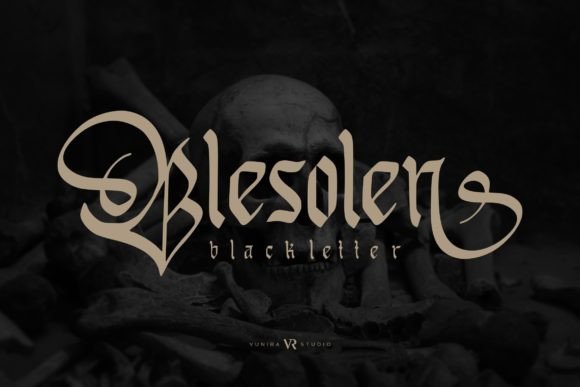
Blesolen reimagines this classic style by softening its rigid edges while maintaining its structural integrity. It is classified as a modern script blackletter, a hybrid category that allows for greater readability and versatility. The font retains the high contrast and dramatic flair of its ancestors but introduces a flow that mimics hand-lettered calligraphy. This approach ensures that the font does not just sit statically on the page; instead, it guides the eye through the text with a sense of movement and rhythm.
The unique ligatures within Blesolen are particularly noteworthy. In traditional typography, ligatures are characters joined together to improve legibility and aesthetic appeal. In Blesolen, these connections are stylized to create seamless transitions between letters, adding a touch of sophistication that elevates the overall composition. This attention to detail makes the font feel curated and intentional, qualities that are highly valued in premium branding.
Key Features and Visual Characteristics
When evaluating Blesolen for a specific project, several distinct characteristics define its utility and appeal. Understanding these features helps designers leverage the font’s strengths effectively.
- Bold Letterforms: The primary strokes of Blesolen are thick and confident. This boldness ensures that the font commands attention, making it ideal for headlines, logos, and packaging where visibility is paramount. The weight of the letters provides a sense of stability and permanence.
- Unique Ligatures: As mentioned, the interconnected nature of certain letter pairs adds a layer of complexity and beauty. These ligatures prevent the text from feeling disjointed, creating a unified visual block that is pleasing to the eye.
- Elegant Script Influence: Despite its blackletter roots, Blesolen incorporates elements of script typography. This inclusion adds a human touch, reducing the coldness often associated with geometric or mechanical fonts. The result is a typeface that feels personal yet professional.
- Edgy Aesthetic: The combination of sharp angles and flowing curves gives Blesolen an edge. It is not afraid to be different, making it suitable for brands that want to position themselves as innovative, bold, or unconventional.
These features collectively make Blesolen a versatile tool. It is not limited to a single niche; rather, it adapts to various contexts depending on how it is styled and paired with complementary typefaces.
Ideal Applications and Use Cases
Given its distinctive appearance, Blesolen is best suited for applications where visual impact is critical. It excels in environments where you need to capture interest immediately and convey a message of quality and exclusivity. Below are some of the most effective scenarios for using this font.
Branding and Logo Design
For startups and established companies alike, a logo is the cornerstone of brand identity. Blesolen’s bold and elegant nature makes it an excellent candidate for logo lockups, particularly for brands in the luxury, fashion, or artisanal sectors. Imagine a craft brewery seeking to highlight its heritage while appealing to a modern consumer base; Blesolen could provide the perfect balance of tradition and trendiness. Similarly, boutique hotels or high-end restaurants might use it to evoke a sense of timeless sophistication.
Packaging Design
In the retail space, packaging competes for shelf space against dozens of other products. A font like Blesolen can help a product stand out due to its unique silhouette. It works exceptionally well on labels for spirits, cosmetics, and gourmet foods. The script style adds a touch of elegance that suggests premium quality, while the bold letterforms ensure the brand name is legible even from a distance.
Editorial and Print Media
Magazines, newspapers, and editorial layouts often rely on typography to set the tone for articles and features. Blesolen can be used for pull quotes, section headers, or feature titles. Its ability to add drama without overwhelming the layout makes it a valuable asset for editors looking to break up dense blocks of text. When paired with a clean sans-serif body font, Blesolen provides a striking contrast that enhances readability and visual hierarchy.
Digital Marketing and Social Media
While screen readability is a concern with complex typefaces, Blesolen can be effective in digital marketing when used sparingly. Large hero banners, email subject lines, and social media graphics benefit from the font’s strong presence. However, designers should avoid using long paragraphs of Blesolen online, as the intricate details may become difficult to read on smaller devices.
Evaluating Suitability and Practical Considerations
While Blesolen offers numerous advantages, it is not a one-size-fits-all solution. Successful implementation requires careful consideration of context, pairing, and audience expectations.
Pairing with Complementary Fonts
One of the most common mistakes designers make is overusing a display font like Blesolen. To maintain balance, it is crucial to pair it with neutral, highly readable typefaces. A simple sans-serif or a classic serif can serve as an excellent counterpoint, allowing Blesolen to shine as a focal point without causing visual fatigue. For example, using Blesolen for headings and a lightweight Helvetica or Garamond for body text creates a harmonious relationship between the two styles.
Readability and Accessibility
Accessibility is a growing priority in design. Because Blesolen features complex shapes and varying stroke widths, it may not be suitable for all accessibility standards, particularly for users with dyslexia or low vision. Therefore, it should be reserved for large sizes and short bursts of text. Always test your designs at various sizes and resolutions to ensure that the font remains clear and legible across different platforms.
Industry Relevance
Certain industries may find Blesolen less appropriate than others. While it fits well in fashion, hospitality, and artisanal goods, it might clash with the minimalist or tech-forward aesthetics preferred by software companies or healthcare providers. Before adopting Blesolen, consider whether its edgy and traditional vibe aligns with your brand’s core values and target demographic.
Maximizing Value Through Strategic Usage
To get the most out of Blesolen, treat it as a strategic asset rather than a decorative afterthought. Here are some practical tips for integration:
- Use Sparingly: Let the font speak for itself. Overuse dilutes its impact and can make designs look cluttered.
- Focus on Hierarchy: Use Blesolen to establish a clear visual hierarchy. Reserve it for titles, names, and key messages.
- Experiment with Scale: Don’t be afraid to go large. Blesolen shines when it is big enough to showcase its ligatures and bold forms.
- Consider Color and Texture: The font’s character can be enhanced by thoughtful color choices and background textures. Metallic foils, embossing, or subtle gradients can further emphasize its luxurious qualities.
By adhering to these guidelines, designers can harness the full potential of Blesolen, creating visuals that are not only beautiful but also effective in communicating their intended message.
Conclusion
Blesolen represents a sophisticated evolution of blackletter typography, offering a blend of tradition and modernity that resonates with contemporary design trends. Its bold letterforms, unique ligatures, and elegant script influences make it a powerful tool for branding, packaging, and editorial design. Whether you are launching a new product, revamping a corporate identity, or designing a magazine spread, Blesolen provides the visual punch needed to capture attention and convey prestige.
However, like any powerful design element, it requires respect and strategic application. By understanding its characteristics and limitations, and by pairing it thoughtfully with other typefaces, you can create designs that are both visually stunning and functionally effective. In a world saturated with generic templates, choosing a font like Blesolen is a statement of intent—a commitment to quality, craftsmanship, and distinctive style.