Terza Sheta: Integrating Bold Blackletter into Professional Design Workflows
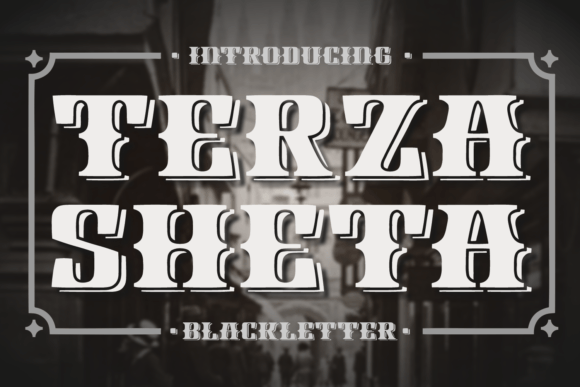
In the landscape of modern graphic design, typography is rarely just about readability; it is a primary vehicle for brand identity and emotional resonance. Among the vast array of typefaces available to designers, Terza Sheta stands out as a distinct choice for those seeking immediate visual impact. It is a chunky, 3D-looking blackletter font that commands attention through its heavy weight and dimensional depth. While blackletter styles have historical roots in medieval manuscripts, Terza Sheta reinterprets this aesthetic for contemporary commercial applications, offering a unique solution for projects that require authority, tradition, or boldness.
For professionals ranging from freelance illustrators to small business owners, selecting the right typeface is a critical decision point in the creative workflow. This article explores how Terza Sheta fits into practical design processes, from initial concept development to final production, ensuring that users can leverage its specific characteristics effectively without compromising legibility or brand consistency.
Understanding the Visual Architecture of Terza Sheta
Before integrating any font into a project, it is essential to understand its structural properties. Terza Sheta is not merely a standard serif or sans-serif typeface; it belongs to the blackletter family but with a modern twist. The "chunky" descriptor refers to its substantial stroke width, which gives the letters a physical presence on the page or screen. The "3D-looking" aspect implies a sense of volume, often achieved through internal shading, beveling effects, or the sheer density of the letterforms themselves.
This visual weight makes Terza Sheta an excellent candidate for high-impact elements. However, its complexity means it requires careful handling. Unlike clean, minimalist fonts that recede into the background, Terza Sheta demands space. It interacts aggressively with surrounding elements, making spacing (kerning and tracking) a vital component of the workflow. When planning a layout, designers must account for the visual noise this font generates. It is best used when the goal is to create a focal point rather than body text.
Strategic Use Cases Across Industries
The versatility of Terza Sheta lies in its ability to convey specific moods: strength, heritage, exclusivity, and intensity. Understanding where these traits align with business goals helps in determining appropriate use cases. Below are several sectors where this font integrates seamlessly into existing workflows.
- Branding and Logo Design: For businesses in the craft beer industry, heavy metal music labels, tattoo studios, or artisanal bakeries, Terza Sheta provides an instant association with craftsmanship and robustness. In the logo creation phase, this font can serve as the primary mark, establishing a strong visual anchor before color and imagery are introduced.
- Product Packaging: On shelves, products compete for milliseconds of attention. A box of premium chocolate, a bottle of hot sauce, or a limited-edition skincare line can benefit from the shelf-popping quality of Terza Sheta. The 3D effect creates a tactile illusion, suggesting richness and substance to the consumer.
- Apparel and Merchandise: T-shirt designs and streetwear graphics often rely on bold typography to communicate attitude. Terza Sheta’s chunky nature ensures visibility even from a distance. It works particularly well for short phrases, band names, or urban-style slogans where the texture of the letters adds character to the garment.
- Event Signage and Posters: For concerts, festivals, or local market stalls, large-scale printing requires fonts that remain legible at size. Terza Sheta holds up well under magnification due to its solid forms. However, contrast against the background becomes crucial to maintain readability.
Integration into the Creative Workflow
Implementing Terza Sheta effectively requires more than simply dragging and dropping the file into a design tool. It involves a series of decisions regarding hierarchy, pairing, and technical preparation. Here is how to manage this font within a standard project lifecycle.
Phase 1: Conceptualization and Mood Boarding
During the initial brainstorming stage, include Terza Sheta in your mood boards if the project calls for a rugged, traditional, or bold aesthetic. Consider what other visual elements will accompany it. Since the font is visually dominant, it pairs poorly with other busy patterns or complex illustrations. Instead, look for clean backgrounds or simple geometric shapes that allow the typography to breathe. This phase is about defining the tone: does the client want approachable friendliness or imposing authority? Terza Sheta leans heavily toward the latter.
Phase 2: Pairing and Hierarchy
One of the most common mistakes in using display fonts like Terza Sheta is failing to establish a clear typographic hierarchy. Because this font is so strong, it should generally be reserved for headings, titles, and key phrases. To balance it, pair it with a neutral, highly readable sans-serif or a simple serif for body copy. For example, using a clean geometric sans-serif for descriptive text allows the viewer to process information easily after being caught by the bold headline.
When setting up your style guide or document structure, define clear rules:
- Use Terza Sheta only for text blocks under five words.
- Maintain significant white space around the letters to prevent visual clutter.
- Avoid all-caps if the font already has strong capital forms; lowercase may offer better rhythm depending on the word length.
Phase 3: Technical Preparation and Compatibility
Before moving to production, ensure that the font files are compatible with your intended output medium. If you are designing for print, verify that the vector outlines of Terza Sheta are clean and free of artifacts. The 3D effect, if simulated via gradients or shadows, must be flattened or converted to outlines to avoid rendering issues in pre-press software.
For digital applications, such as websites or social media graphics, consider the load time and scalability. Web fonts need to be optimized. If Terza Sheta is being used for web headers, ensure it loads quickly and degrades gracefully on older browsers. Test the font at various screen resolutions to confirm that the "chunky" edges do not appear pixelated or jagged on low-DPI displays.
Quality Control and Consistency Checks
Consistency is key to professional branding. Once Terza Sheta is selected, it must be applied uniformly across all touchpoints. This includes checking kerning pairs manually. Automatic kerning often struggles with irregular blackletter shapes, leading to awkward gaps between letters. For instance, the intersection of thick vertical strokes and curved terminals may require manual adjustment to ensure visual equilibrium.
Additionally, monitor color contrast. Due to the dark, dense nature of the font, light gray or pastel backgrounds may reduce legibility. High-contrast combinations, such as black on white, gold on black, or deep red on cream, tend to work best. These palettes enhance the 3D perception and reinforce the premium feel associated with the typeface.
Long-Term Maintenance and Adaptation
As trends shift, maintaining relevance is important. While Terza Sheta offers a timeless appeal rooted in historical aesthetics, it can feel dated if overused or paired incorrectly. Regularly review your usage to ensure it still aligns with current brand values. If your brand evolves towards minimalism, consider reducing the frequency of Terza Sheta usage or switching to a lighter variant if one exists.
Furthermore, keep an eye on licensing terms. Display fonts often have different licensing structures compared to body text fonts. Ensure that your usage rights cover all intended platforms, including merchandise sales, broadcast media, and international distribution. Proper legal compliance protects both the designer and the client from future complications.
Conclusion
Terza Sheta is a powerful tool in the designer’s arsenal, capable of elevating titles, logos, and packaging with its distinctive 3D blackletter style. By approaching its integration with a focus on workflow efficiency, careful pairing, and technical precision, creators can harness its potential without sacrificing clarity or professionalism. Whether you are launching a new product line or refreshing a brand identity, understanding how to wield this bold typeface responsibly will result in designs that are not only visually striking but also strategically sound.