Runholdy: Elevating Design with Art-Deco Blackletter Elegance
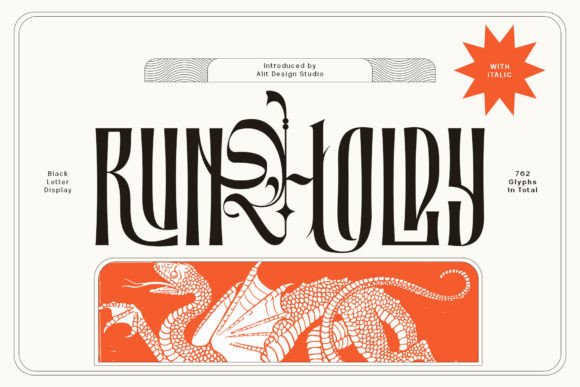
In the vast landscape of digital and print design, typography serves as the voice of your brand. It speaks before a single word is read, setting the tone, establishing authority, and evoking emotion. Among the myriad typefaces available to designers and business owners, few possess the striking visual impact and historical resonance of Runholdy. This stunning font bridges the gap between the ornate tradition of blackletter calligraphy and the geometric precision of the Art Deco movement, creating a typeface that is both timeless and distinctly modern.
For creators seeking to make a bold statement without sacrificing sophistication, Runholdy offers a unique solution. Whether you are designing a luxury brand identity, a high-end event invitation, or a modern editorial layout, understanding the nuances of this font can significantly enhance your project’s aesthetic value. This guide explores the characteristics, applications, and practical considerations of using Runholdy in your design workflow.
The Essence of Runholdy: A Fusion of Eras
To truly appreciate Runholdy, one must understand the two distinct design movements it synthesizes. On one hand, it draws from the rich heritage of blackletter scripts—typefaces characterized by their dense, vertical strokes and intricate details that originated in medieval Europe. These fonts often convey a sense of history, tradition, and gravitas. On the other hand, Runholdy incorporates the sleek, streamlined aesthetics of Art Deco, an artistic style that flourished in the 1920s and 1930s. Art Deco is known for its emphasis on symmetry, geometric shapes, and luxurious materials.
Runholdy achieves a rare balance by taking the structural complexity of blackletter and refining it with clean, sharp lines. The result is a font that retains the dramatic flair of its predecessors but sheds the visual clutter that can sometimes hinder readability. Its bold, geometric shapes provide a solid foundation, while the elegant curves add a touch of refinement. This blend makes Runholdy versatile enough for contemporary designs while still honoring classic design principles.
Key Characteristics
- Sharp Geometric Forms: Unlike traditional blackletters which may feature rounded or irregular edges, Runholdy utilizes precise angles and straight lines, giving it a structured and disciplined appearance.
- Sophisticated Contrast: The font features a dynamic interplay between thick and thin strokes, creating visual interest and depth that draws the eye.
- Clean Line Work: The absence of unnecessary serifs or decorative flourishes ensures that the font remains legible even at smaller sizes or in complex layouts.
- Bold Presence: Runholdy commands attention. It is not a background element; it is a focal point designed to anchor a composition.
Where Runholdy Shines: Practical Applications
While Runholdy is undeniably striking, its power lies in knowing where and how to deploy it. Overusing a heavy, display-style font can lead to visual fatigue and reduce the overall effectiveness of a design. Therefore, strategic application is key. Below are several scenarios where Runholdy excels, providing real-world examples of its utility.
Brand Identity and Logos
For businesses aiming to project an image of luxury, exclusivity, or heritage, Runholdy is an excellent choice. Imagine a high-end jewelry brand, a premium whiskey distillery, or a boutique fashion house. In these contexts, the font’s Art Deco influences suggest glamour and quality, while its blackletter roots imply craftsmanship and tradition. When used in a logo, Runholdy can serve as the primary mark, instantly communicating the brand’s personality to consumers.
Consider a fictional artisanal coffee roaster named "Iron & Leaf." By pairing Runholdy for the word "Iron" and a simpler sans-serif for "& Leaf," the brand creates a visual hierarchy that emphasizes strength and robustness, appealing to customers who value bold flavors and strong character.
Event Invitations and Stationery
Gone are the days when only formal weddings required elaborate script fonts. Modern events, from gala dinners to product launches, benefit from the theatricality of Runholdy. Its elegance makes it perfect for save-the-dates, wedding invitations, and VIP passes. The font’s ability to convey importance and celebration adds a layer of prestige to physical mailers. When printed on high-quality cardstock with foil stamping, Runholdy takes on a tactile dimension that enhances the user experience.
Editorial and Magazine Covers
In the competitive world of publishing, headlines must grab attention immediately. Runholdy’s bold geometry ensures that titles stand out against busy backgrounds or photographic elements. Fashion magazines, lifestyle blogs, and niche publications can use Runholdy for section headers or pull quotes to break up text and add visual rhythm. Its modern twist prevents the design from feeling dated, allowing editors to experiment with retro-inspired themes without looking like they are stuck in the past.
Evaluating Suitability: Strengths and Considerations
Before integrating Runholdy into a project, it is essential to evaluate its strengths alongside potential limitations. No single font is a universal solution, and understanding its constraints will help you make informed design decisions.
Strengths
- Distinctive Personality: Runholdy sets your design apart from the sea of generic sans-serifs and standard serif fonts. It provides immediate visual differentiation.
- Versatility within Niche: While primarily a display font, its clean lines allow it to work well in various contexts, from web headers to packaging labels.
- Cross-Platform Appeal: The font’s geometric nature translates well across different media, whether displayed on a screen or printed on paper.
Considerations and Limitations
Readability: Due to its complex structure, Runholdy is not suitable for long-form body text. Using it for paragraphs can strain the reader’s eyes and reduce comprehension. It should be reserved for headings, titles, and short phrases.
Pairing Challenges: Because Runholdy is so visually dominant, it requires careful pairing with complementary typefaces. Simple, neutral fonts such as minimal sans-serifs or light serifs work best to balance its weight. Avoid pairing it with other decorative or high-contrast fonts, as this can create visual chaos.
Contextual Appropriateness: Given its association with luxury and formality, Runholdy may feel out of place in designs meant to convey playfulness, approachability, or casual ease. For example, a children’s toy company or a budget-friendly fast-food chain would likely find Runholdy too serious or exclusive for their brand voice.
Best Practices for Implementation
To get the most out of Runholdy, follow these practical guidelines to ensure your designs remain effective and aesthetically pleasing.
1. Prioritize Hierarchy
Use Runholdy to establish clear visual hierarchy. Let it headline your content, and use lighter, simpler fonts for supporting text. This contrast helps guide the viewer’s eye through the information in a logical order.
2. Mind the Spacing
Blackletter-inspired fonts often require generous letter-spacing (tracking) to breathe. Tight spacing can cause the intricate details of Runholdy to merge, reducing legibility. Experiment with wider tracking to enhance its elegance and improve readability, especially in all-caps settings.
3. Leverage Negative Space
Give Runholdy room to shine. Avoid cluttering the surrounding area with excessive graphics or competing text elements. Negative space allows the font’s geometric shapes to stand out and reinforces the sophisticated mood it aims to convey.
4. Test Across Sizes
Always preview Runholdy at the sizes it will actually be used. What looks impressive at a large display size may become illegible at smaller scales. Ensure that the font maintains its integrity and clarity across various devices and resolutions.
Conclusion: Making a Lasting Impression
Typography is more than just arranging letters; it is about crafting an experience. Runholdy offers designers and business owners a powerful tool to communicate sophistication, strength, and elegance. By blending the historic allure of blackletter with the modern precision of Art Deco, it provides a unique aesthetic that can elevate any project.
Whether you are rebranding a legacy business, designing a memorable event suite, or simply looking to add a touch of class to your digital presence, Runholdy delivers. However, its success depends on thoughtful application. By respecting its strengths, acknowledging its limitations, and pairing it wisely, you can harness the full potential of this stunning font. In a world saturated with visual noise, Runholdy cuts through the clutter, offering a clear, confident, and captivating voice for your message.
As you explore your next creative endeavor, consider how Runholdy might fit into your vision. It is not just a font; it is a statement. Use it wisely, and let your designs speak with the authority and grace that only true elegance can provide.